About the Journal
The journal is a forum for the discussion of ideas, scholarly opinions and case studies of urban resilience in Zimbabwe. It promotes multidisciplinary engagement of urban resilience as a subject and practice. It is a product of the Faculty of Social and Behavioural Sciences supported by the UNDP - UNICEF Urban Resilience Programme. The journal is produced bi-annually.
Current Issue
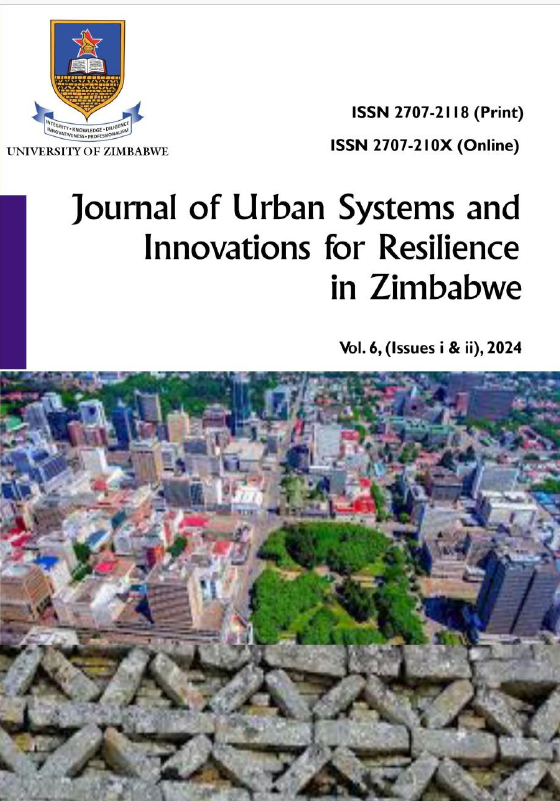
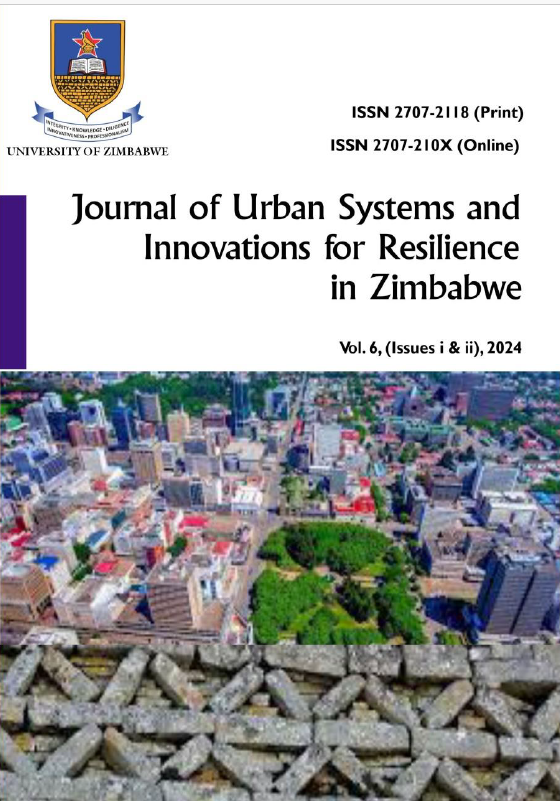
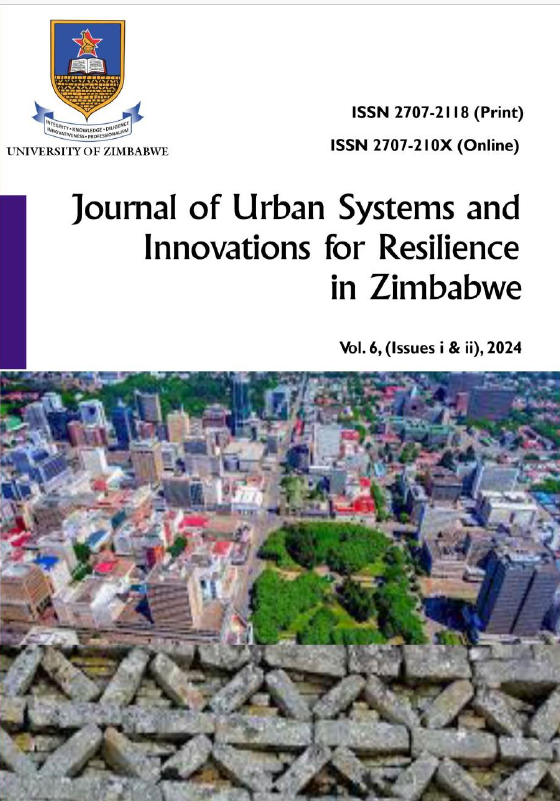
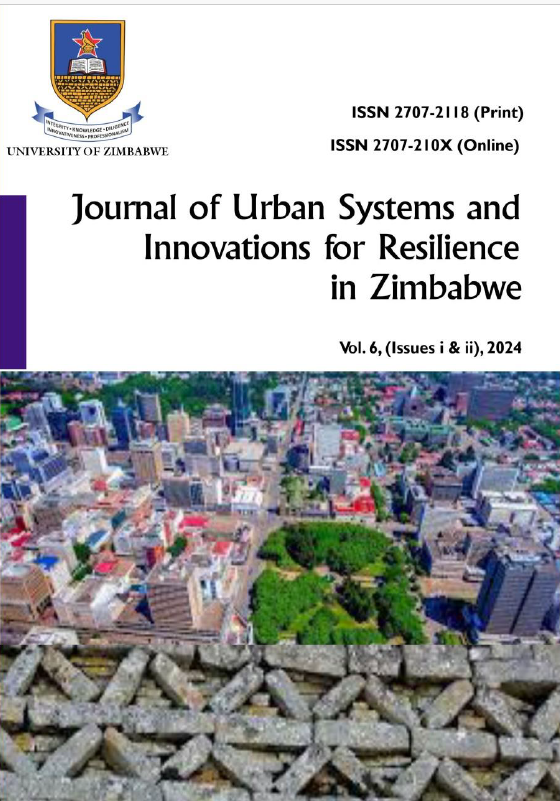
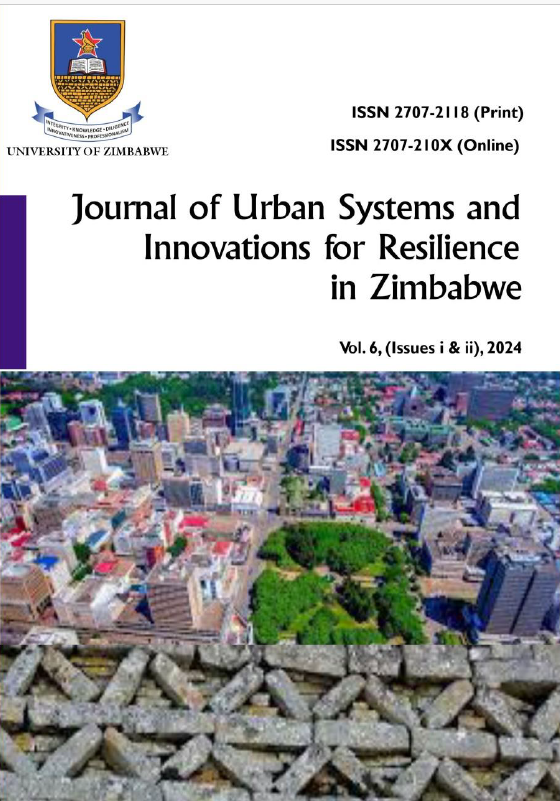
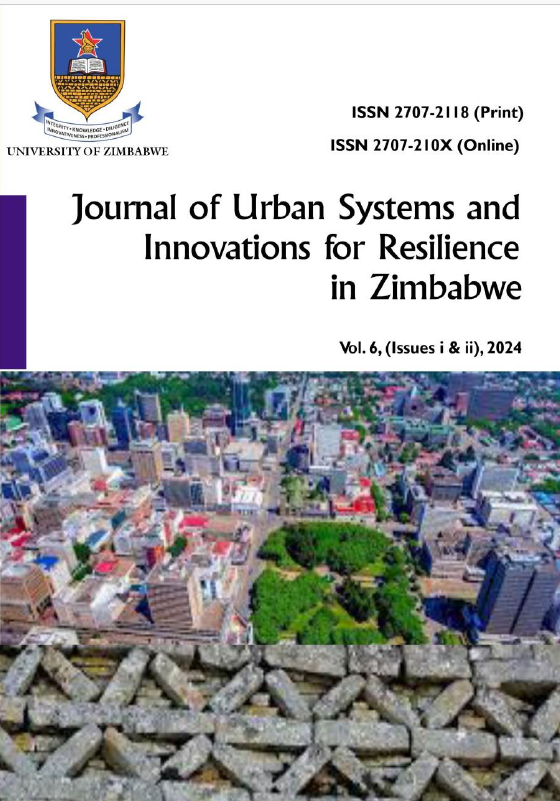
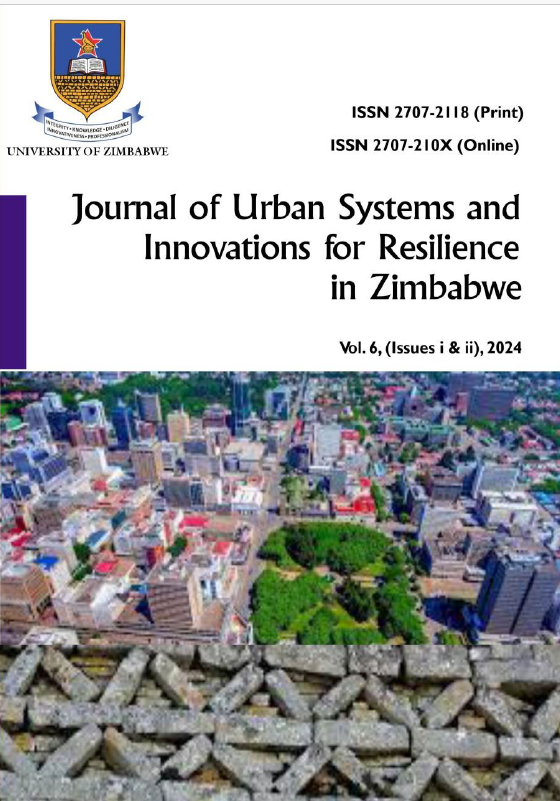
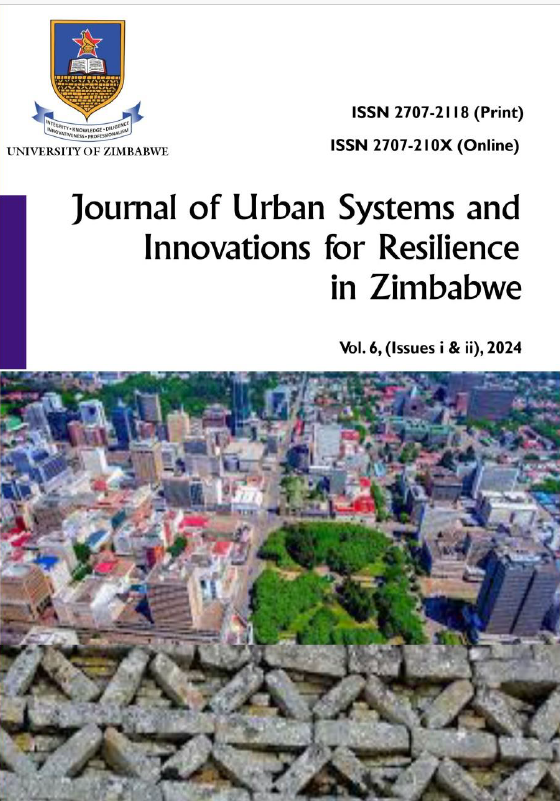
Vol. 6 No. 1 (2024): Journal of Urban Systems and Innovations for Resilience in Zimbabwe
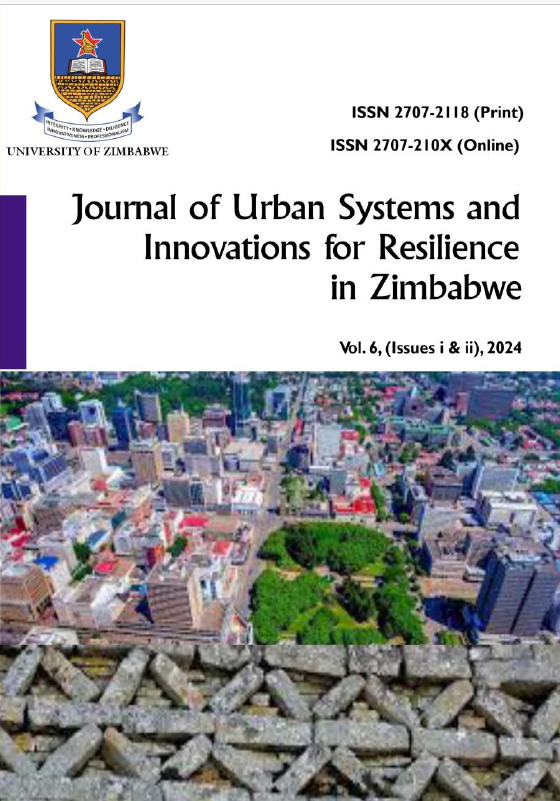
Volume 6 (Issues 1 and 2) responds to entrenched policy challenges in the pursuit of resilient urban communities across Zimbabwe‘s secondary cities and towns. Amidst macroeconomic turbulence characterised by hyperinflation, currency instability and fiscal austerity, urban areas increasingly confront gender-insensitive interventions that exacerbate vulnerabilities among women and marginalised groups. These challenges are compounded by a weakened civic culture that limits meaningful participation. Resource constraints, reflected in underfunded municipal budgets and infrastructural backlogs further heighten vulnerability to floods, economic shocks and social fragmentation. This is particularly shown in mining-dependent settlements such as Zvishavane and rapidly expanding peri-urban areas like Ruwa.
This double Issue aligns with global policy frameworks, including the UN-Habitat World Cities Report 2024 and Sustainable Development Goal 11, while resonating with regional priorities articulated in the African Union Agenda 2063 and the Southern African Development Community (SADC) Climate Change Adaptation Protocols. By focusing on often-overlooked urban peripheries beyond Harare, the Volume adopts a transdisciplinary perspective that draws on urban planning, environmental economics, spatial justice and resilience engineering to examine extractive legacies and urban retrofitting processes. Addressing empirical gaps in post-mining transitions and flood-prone hydrological systems, the Volume mobilises evidence from case studies in Zvishavane, Harare‘s suburbs, the Ruwa catchment and emerging growth points such as Nyika in Bikita District, Zimbabwe.
The contributions collectively examine interconnected policy challenges, grounded in empirical analyses of Zimbabwe‘s urban–rural interface. Amodelling. In mining contexts, the Zvishavane case advances a ‗Mine Urban Resilience Framework‘ that promotes rent-to-buy housing schemes, adaptive reuse of infrastructure and legislative reforms enabling revenue cross-subsidisation through land value capture. In suburban contexts, the revitalisation of High Glen is conceptualised through hybrid public–private partnerships (PPPs), incorporating mixed-use development models, flexible rental structures and tenant clustering strategies to address voids and shifting retail dynamics. Flood risk mitigation is strengthened through GIS-based modelling approaches applied in the Ruwa catchment, integrating CHIRPS rainfall data, SRTM digital elevation models and composite susceptibility indices to delineate planning buffers and inform metropolitan-scale interventions. Gender-responsive water governance is advanced through participatory approaches that foreground women‘s leadership in borehole management and decision-making processes. In Caledonia, innovative regularisation strategies combine tenure security; infrastructure planning and stakeholder co-production to support transitions from informal to formal settlement structures. Meanwhile, the retrofitting of growth points such as Nyika demonstrates the potential of DPSIR-informed smart interventions, including solar technologies, sensor-based metering, digital twin systems and community-based environmental monitoring platforms, to foster low-carbon and adaptive development pathways.
Collectively, these contributions articulate transformative policy imperatives for both central and local government: embedding spatial justice in post-mining governance; revitalising suburban economies through adaptive Public-Private Partnership (PPP) frameworks; operationalising flood resilience through data-driven planning; advancing gender-inclusive water and housing governance and promoting sustainable retrofitting in emerging rural settlements. In the context of intensifying climate and economic uncertainties, the Volume calls upon Zimbabwean policymakers, planners and stakeholders to harness these insights in shaping inclusive and adaptive urban futures underscoring the fact that equitable, contextually grounded planning, rather than extractive economic models alone, forms the foundation of resilient and thriving human settlements.
Published:
2024-12-31